
I needed to get a post out about one of the more exciting plants to make its home in mine. This is all about the Goldfinger Banana!!
One of my colleagues at work lives around the Doncaster area (and talking about in Melbourne, Australia), and I am about 20 kilometres South in Bentleigh.
There is a big difference between the two places – Doncaster has the kind of rich fertile soil I am working towards, and was home to many farms and orchids even until recent times. Bentleigh is one of a group of suburbs known as the Sandbelt, with poor quality loose soil over a clay base.
Great for golf courses, not so great for gardening.
So one day my colleague brings in a little pot with a banana plant, wearing a big smile and telling me that the mummy is a great producer, even for Melbourne (cold zone 10, hot zone 4). Not only that, but it seems that it is not uncommon for people to be growing bananas in Melbourne.
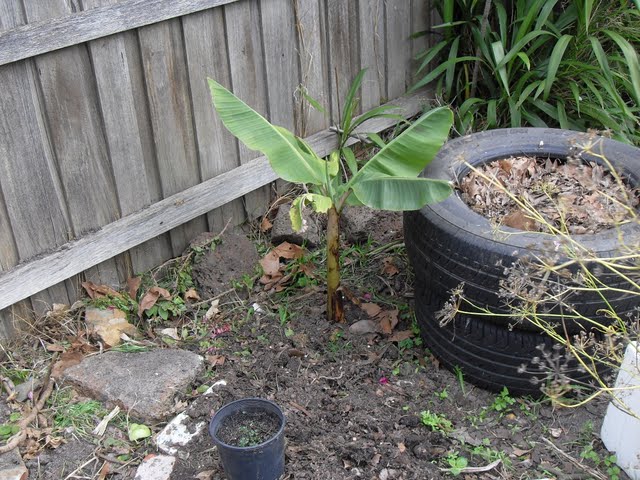
The photo below is the baby banana, about double the height from when it was planted. It grows beautifully in our Summer conditions, and does not mind Winter at all.
That said, I am creating a micro climate around the plant to reduce wind strength and maintain soil temperature.
- Notice the bricks and rocks around the plant? They are there to capture heat from the day and release it back into the soil overnight.
- The car tire compost bin / worm farm combo is sitting close by as a wall to provide a constant supply of vermicast leachate.
- A retaining wall at the front (out of screen) will hold a high mound of earth to divert the wind and be home to a variety of herbs such as stinging nettle, nasturtiums, and marjoram.
- A Chilean Guava has been planted on the left hand side (out of screen) that will grow into a very handy windbreak at 2 X 1 meters.
This is what a Goldfinger banana looks like as it grows up.
And this is what the one from Doncaster looks like. You can see the 6 foot fence ending at the bottom left so this thing is at least 14 foot tall!
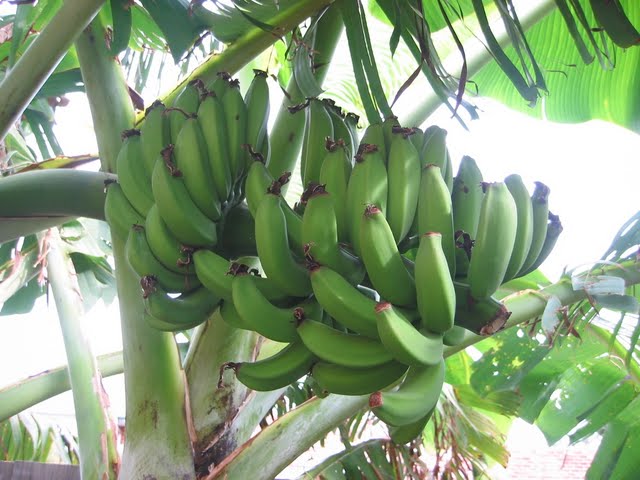
An impressive flower… Most impressive.

Here are the tips to get it to that size:
- Set the plant into a very high quality soil, the best you have.
- Bananas are heavy feeders, so keep adding organic material, or start making your own coffee compost.
- Bananas love nitrogen and potassium, which means adding things like used coffee grounds, spent plant material, manure, citrus peels, and seaweed extract.
- An environment that maintains an even, preferably warmish temperature.
- A steady supply of water.
- Protection from the elements from the company of other plants, shrubs, and herbs. As in the picture below, the banana is about center. And on the right is that retaining wall in progress that I mentioned earlier.
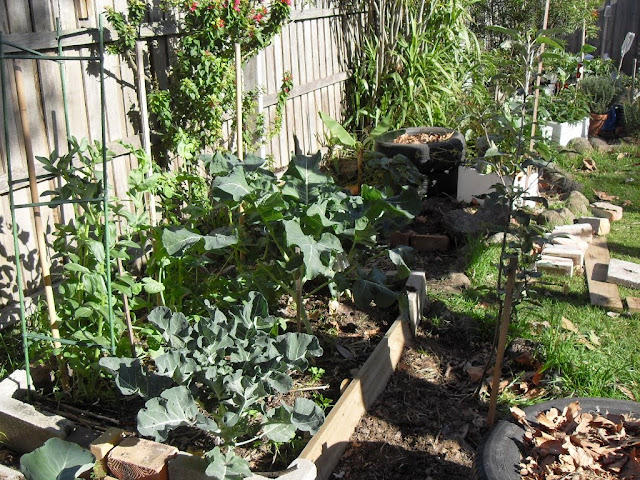
And here is a banana tree update – August 2012. There is now a lavender growing nearby and in-front is a tire pond (under construction).
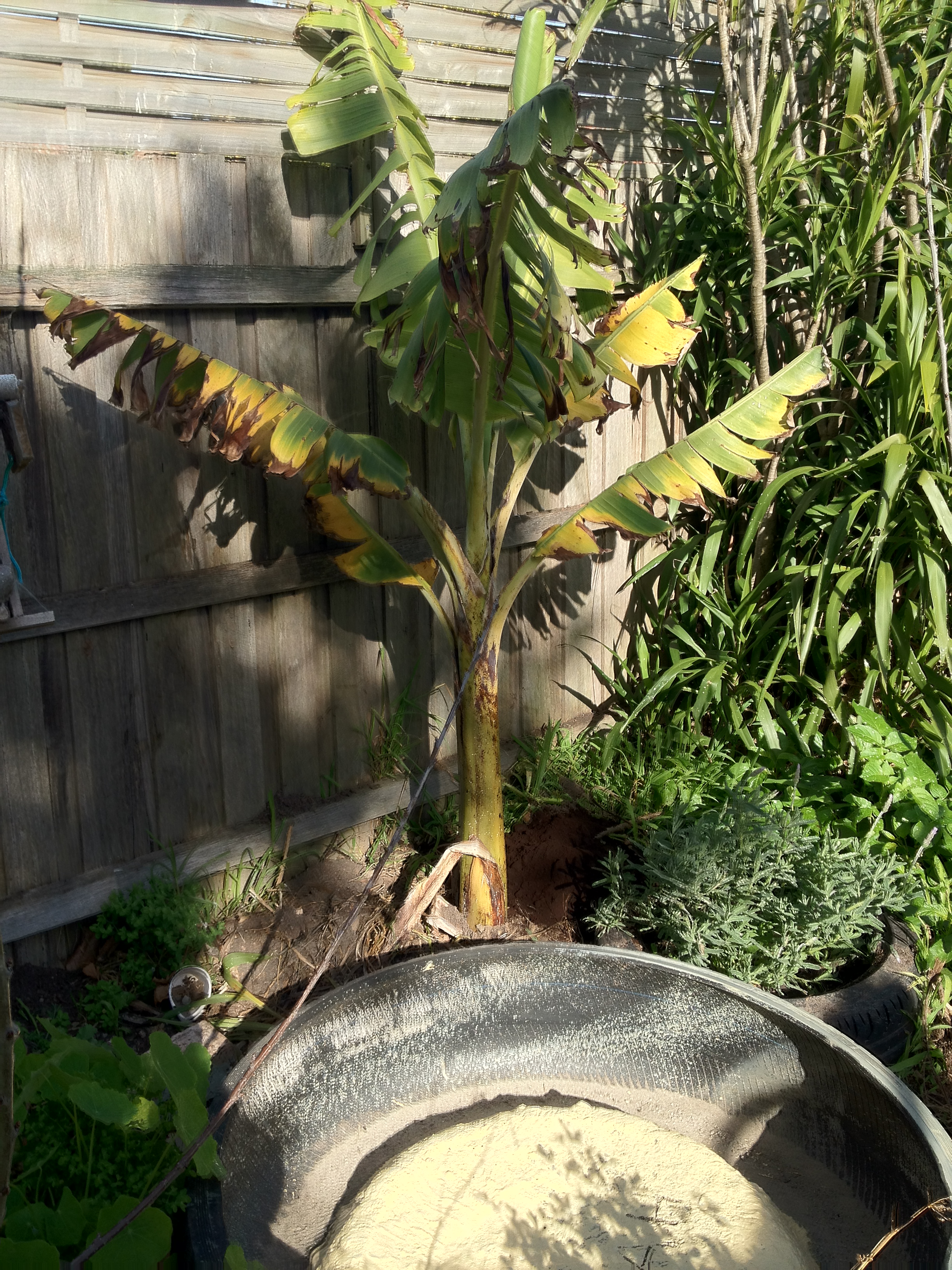
Another one from August 2012. At the base is a good amount of coffee grounds for fertilizer.

Fingers crossed the next update has some fruit in it!





 Ground to Ground
Leave a reply to The Herb Garden | Coffee Grounds to Ground Cancel reply