Introducing Coffee Compost
It’s common to hear the term ‘Coffee Compost’ used among those that collect grounds for gardening (and besides being cool to say try doing that 5 times quickly). Imagine my surprise when I was unable to find a formal definition, just general instructions on how coffee grounds can be included as an ingredient in making compost and not as the main focus of it. Just not good enough!!
This article is going to offer a definition for Coffee Compost, then quickly go through some of the steps to make it it your own backyard. And as I am fond of including photos to prove that coffee grounds are indeed excellent for all types of plants, we are going to have some of those in no particular order.
A Definition of Composts
“a mixture that consists largely of decayed organic matter and is used for fertilizing and conditioning land.”
OK so that should not be a surprise to anyone, so what would we say about a definition for Coffee Compost?
“a mixture of decayed organic matter that consists largely of used coffee grounds for fertilizing and conditioning land.”
That is probably a good place for us to start, with a shared definition.
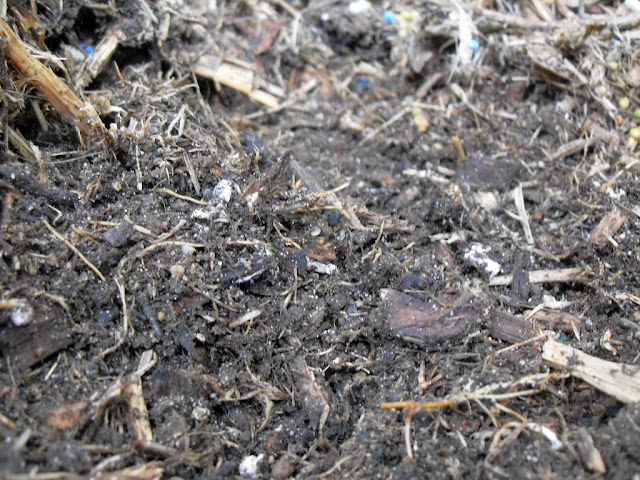
Now putting the definition to work, the photo below is from around the root zone of an Apricot tree, with a compost made from 50% used coffee grounds, 35% pea straw, and 15% aged vermicast.
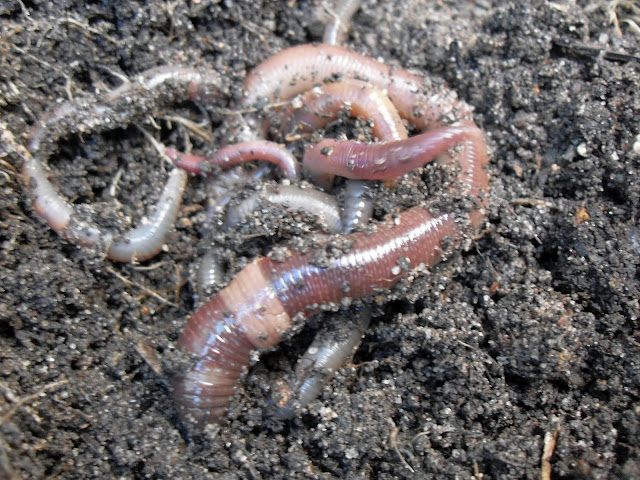
Below is a compost made from 60% coffee grounds and 40% leaves and cardboard. What appear to be very healthy compost worms have made a home in it, and it looks like a cocoon just below them, to introduce the next generation of these miraculous creatures.
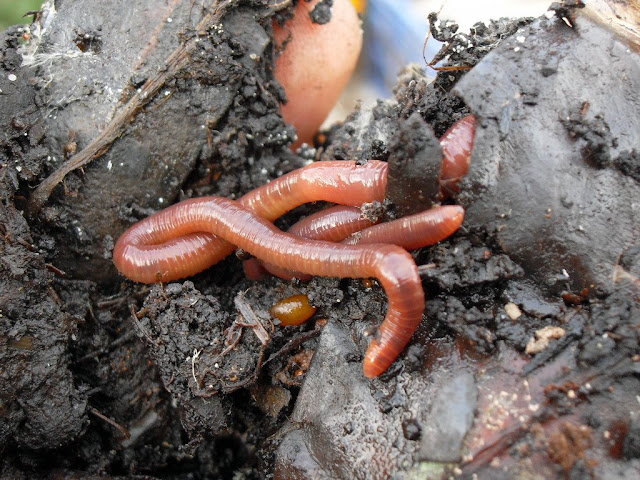
I was not expecting to find 4 different worm species in a coffee compost maturing in a polystyrene container, including a large earthworm. See how rich that soil is?
How to Make Coffee Compost
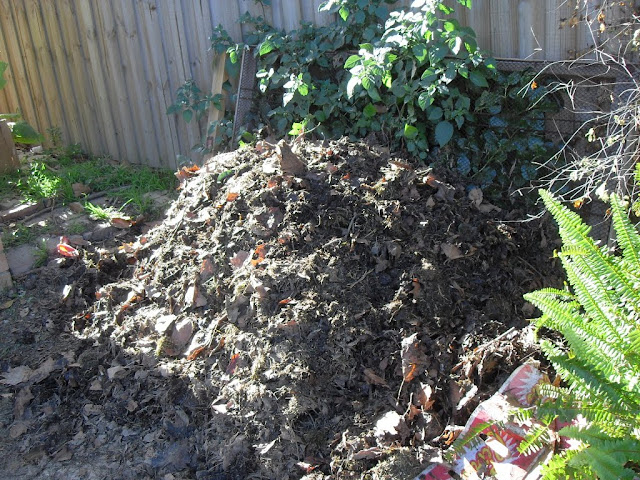
Just ignore that nasty weed Eastern Black Nightshade growing at the back of the pile below. Someone more versed in gardening than I encouraged me to remove it. The next photo is a fortnight later free of evil weed plant!
Here are the main steps to make coffee compost:
- Find a spot of bare soil with some protection from the wind and rain
- Create a pile which by weight includes approximately – 40% used coffee grounds, 20% lawn clippings, and 40% dried leaves (and a few handfuls of bone meal or rock dust)
- See if you can get the pile to 1 meter high, wide, and across. This size allows the pile to generate the required temperatures for speedy decomposition
- Mix it all up really well and break-up any lumpy grass or coffee cakes (or if you have a shredder even better)
- To the top add a good shovel full of your last compost or other good quality soil (there are microbes in there that will happily spread to this batch)
- Pour in enough rain water to leave the pile damp but not dripping, and if you want to get the most of out it, add a liquid starter such as urine, fruit juice, dissolved molasses or seaweed concentrate
- Poke holes through and into the pile, enough that the contents are sitting loose. All the heat in a compost pile is due to microbes, and they need those air pockets to survive
- Now sit back and within 2 days the centre of the pile should get upwards of 60 degrees Celsius (140 F). The pile will cool down within 5 days, so keep repeating the last 2 steps until it stops heating up (this will take 3-4 weeks)
- Allow the pile to rest for at least one month, and during a wet Winter, keep covered with a hessian mat, old carpet, or a thick layer of dried leaves
- During that rest period, add as many compost worms as you can to achieve an even more potent compost
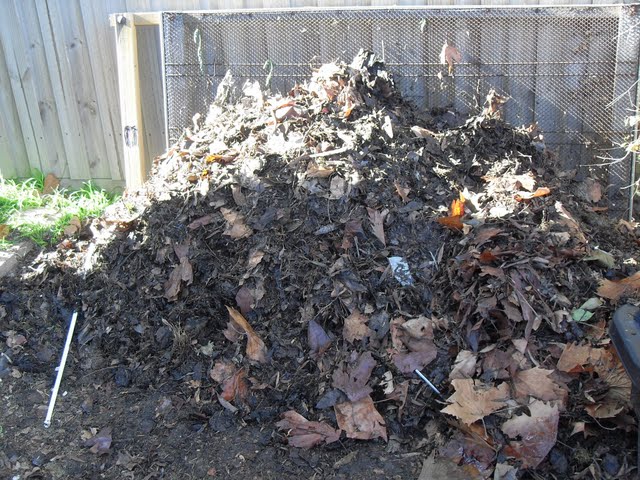
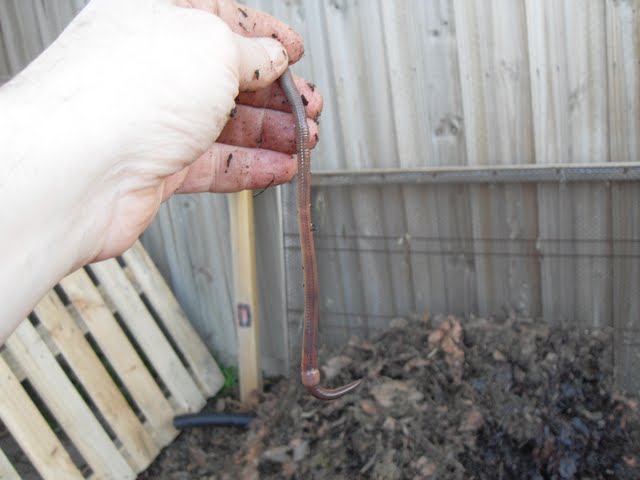
Now a week or so later, the pile has settled and cooled, enough to welcome the best of guests. I come across these big earthworms every so often, and they are a joy to hold.
Now for a sample of some fruit trees that benefit from a coffee compost, starting with a Passion Fruit on the left and a Cherry (Lapins) on the right.


Citrus trees really like a coffee compost, just as they like grounds added straight. Here we have a Lemon on the left and Tahitian Lime on the right.
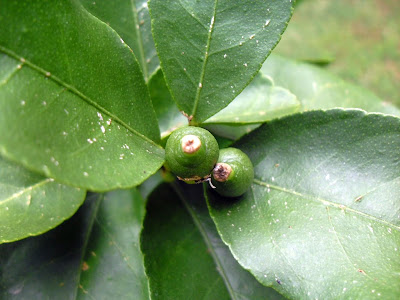
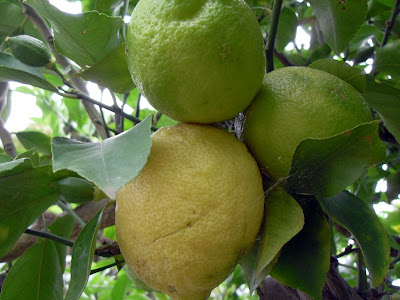
And not to be outdone, on the left we have an Apple (Granny Smith), and a Plum (Satsuma).
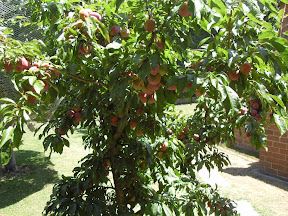

All these fruit trees are growing well with coffee compost, particularly if it is laid 3-6 inches thick around the root zone. It prevents weeds from gaining a hold and keeps the soil moist and alive with beneficial microbial and insect life.
As a final thought, one of the best things about making your own coffee compost is how little it costs to make – even with those extra optional ingredients it will only come to a few dollars, and you know what went into it. I’ll leave you for now to enjoy the process of making your very own coffee compost – Good Luck!!
What kind of compost are you making for the garden?


 Ground to Ground
Leave a reply to Daniel Louis Cancel reply