
This post is in response to some questions I’ve received about drying coffee grinds and then how to store them.
This becomes important when you are collecting large quantities of used grounds, or large enough that you can’t use right away.
Used coffee grounds do not store too well due to their high water content; in this state they are primed to decompose which is a great thing for everything but long term storage.
Just follow these steps for dried coffee success:
- Get yourself some used coffee grounds. If you are unsure of where to go to get them, your local cafe is a good place to start, and if still in doubt then check out the Ground to Ground Map on Google for more locations.
- The grounds you collect should be fresh and not at the point where they have started to mold. If they start getting a mouldy smell, and go blue or white (or blueish or green), then those used coffee grounds are perfect for adding to the compost but not for drying out and then storing.
- Find one of those bakers trays with the crisscross gaps in the base. Cover the base with dry newspaper (and removing any staples), about 6 sheets thick.
- Lay the coffee grounds over the newspaper, keeping the grounds no more than 2-3 inches (5-8cm) thick at a time.
- Place the tray in a sunny spot with noticeable air flow.
- Work in strips of newspaper through the grounds and leave them there
That should be enough to get you started. Now just replace those strips of newspaper every day or so, and mix the whole lot up so the wetter grounds at the bottom are given a chance at the top. You will know the difference between wet and dry grounds by feel and by color.
In case you were wondering, there are other ways to dry used coffee grounds.
I have used a convection oven (OK for a handful), a microwave (started emitting a weird smell that stayed there for weeks), an old hair dryer (you need to be really desperate to do it this way, and I was!), and grounds in a cloth bag in the clothes dryer (again with the weird smell and what a waste of electricity). So do it in the sun and wind as outlined above if you can.
Drying Used Coffee Grounds in Pictures
And for all of you that prefer the visuals, we have those for you also.
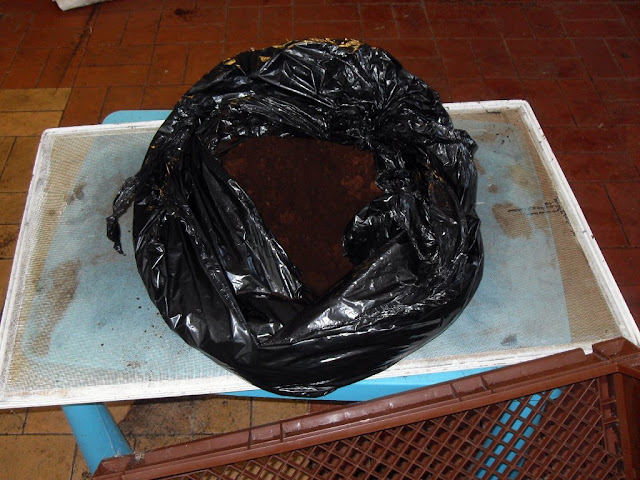
The plastic bag full of used coffee grounds. Slightly damp as you would expect with plenty of coffee cakes.
The old screen door I’m using to break up the coffee cakes and get a heap of air through the whole pile.
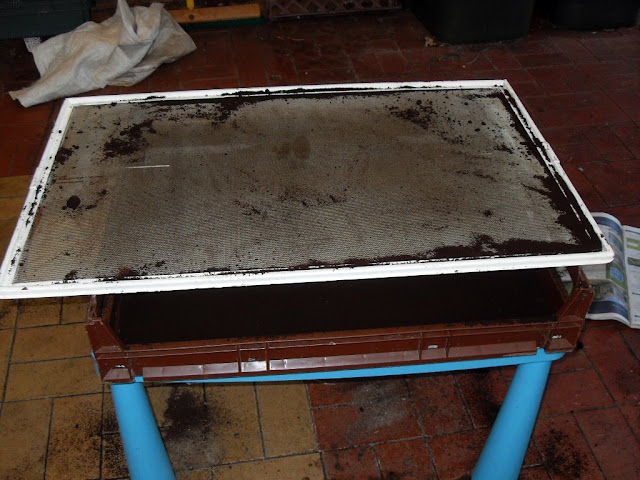
Lay the grounds over the screen and start pressing them through onto the tray below.
Do check that there are no stray pieces of metal sticking from the screen, because you don’t want to be pressing down on it and then getting a piece of metal stab you under a pile of grounds coffee. No no no!
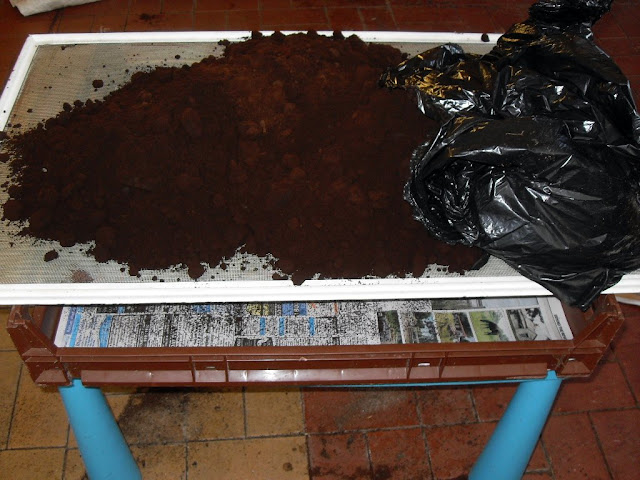
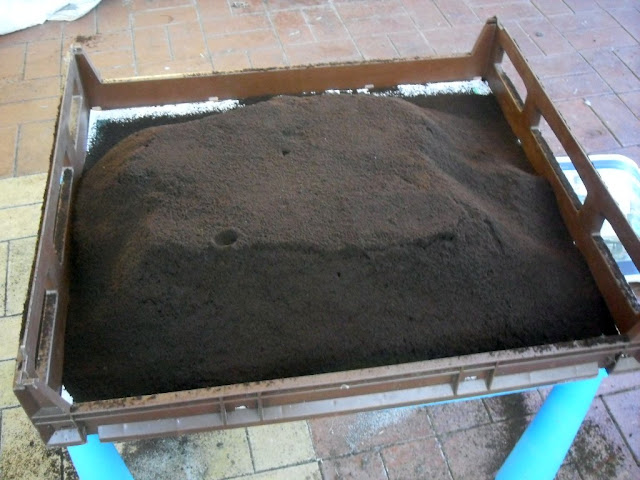
A lovely, fluffy pile of used coffee grounds waiting to be dried by the sun and wind.
Here we have a video of drying out grounds without putting them through the wire mesh. The results were not as good as what I’ve outlined above, but big thanks to my little helper!
http://www.youtube.com/watch?v=dhn22Uhakgs
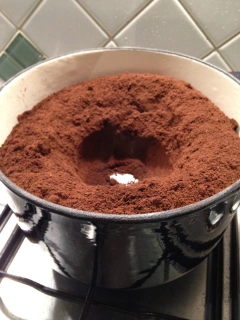
Still wet, this heap of used coffee grounds has been prepared nicely for drying.
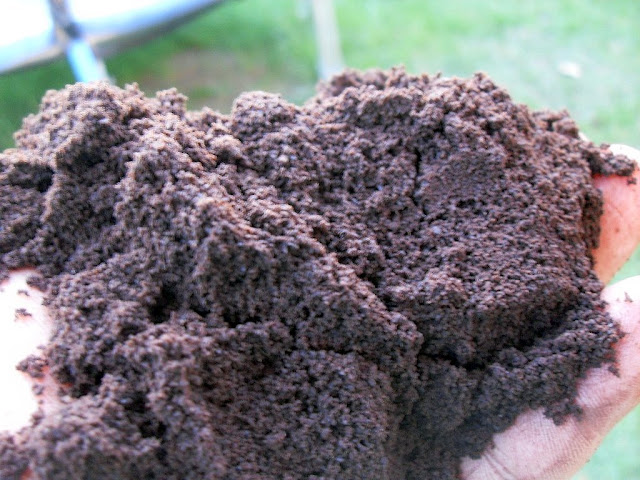
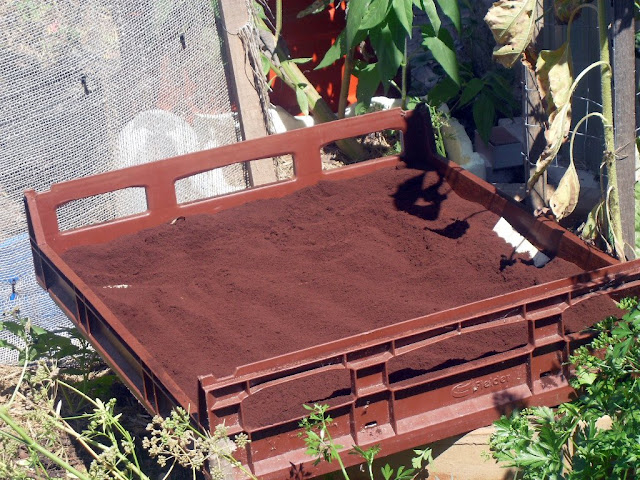
And after a couple of days in the sun, with a nice breeze, most of the moisture has evaporated out, leaving an end product that very much resembles freshly ground coffee.
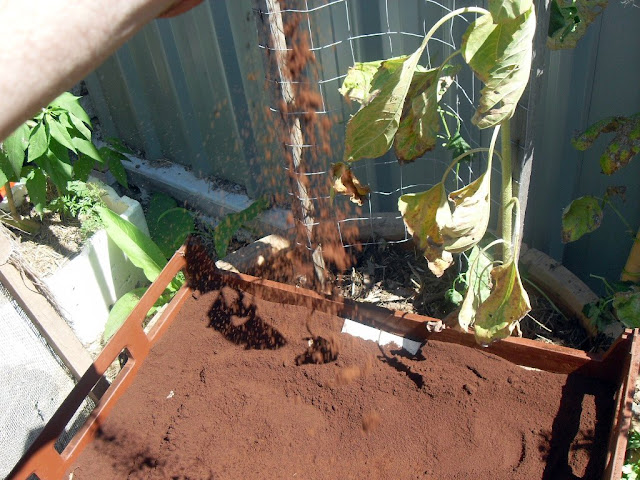
Powdery fine used dried coffee grounds falling through the air.
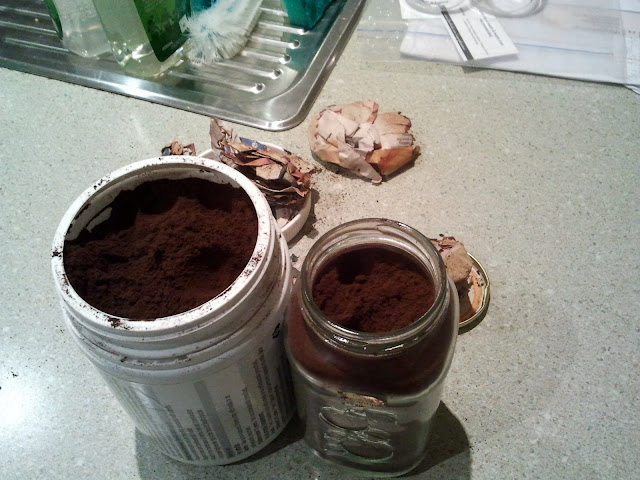
Now once it is all dried off, time to get it stored. Here are some examples, and all work well. Dried coffee grounds can be stored in plastic, a glass jar, or even paper packaging.

These are the containers after a week. There is no evidence of mould or of the grounds getting lumpy, and they smell like fresh coffee. I’m using newspaper at the tops of the jars to absorb any remaining moisture.
To get an understanding of how much moisture there is in used coffee grounds, below is a bag that was weighed before drying – 1.47 kilos.

And here it is after been dried out, now weighing 600 grams.

For How Long Can You Store Used Coffee Grounds?
Pleased to answer because as of this March 2012 update, I have kept these same used coffee grounds for almost a year now and they seem to be doing just fine, as per the photos below.
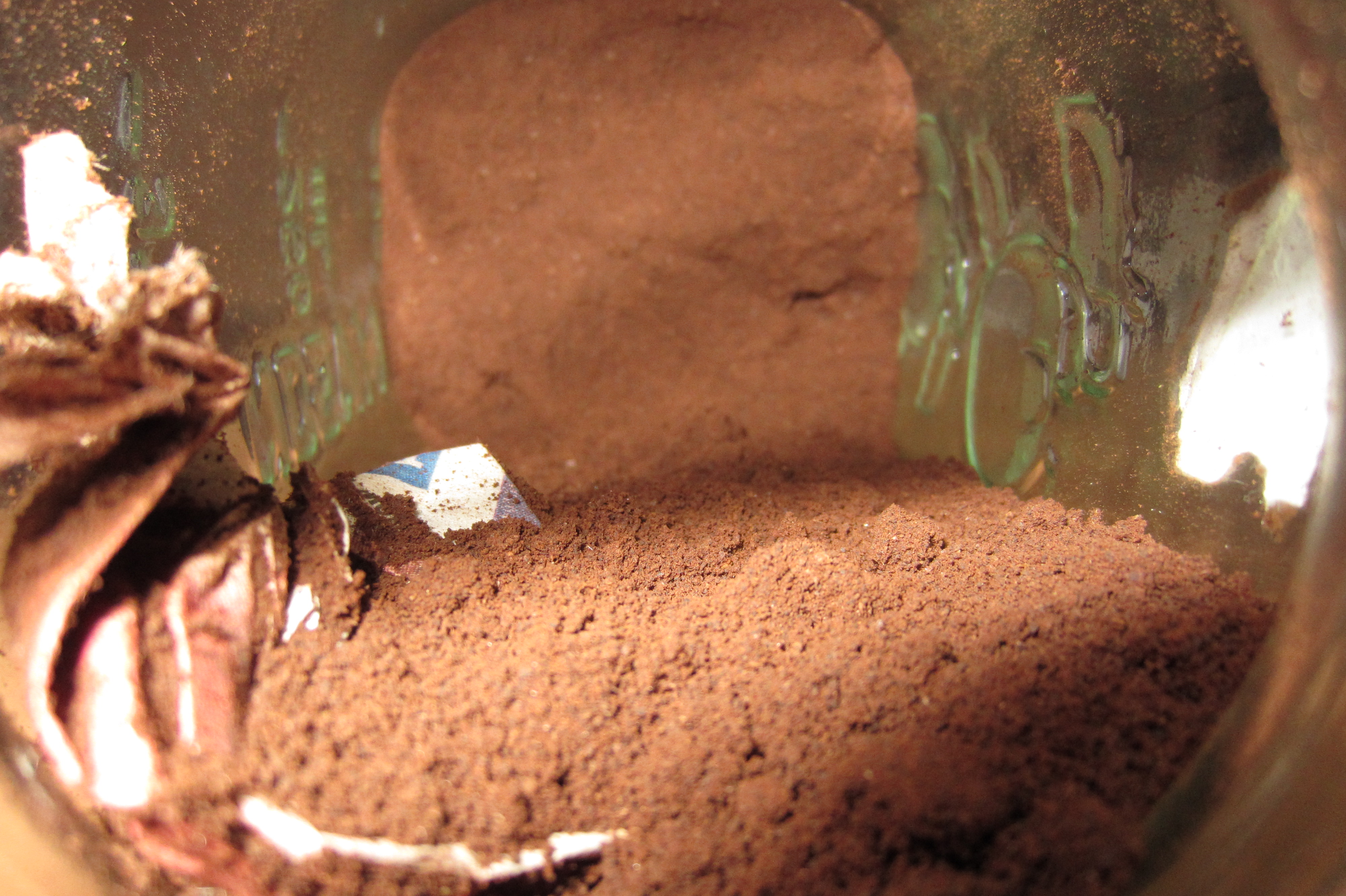
From the same plastic container as earlier in the post. The grounds still smell like coffee and have no trace of mold or decay. They are very dry and coarse.

And the year old dried coffee grounds in the glass jar – doing nicely, with no use by date that I can think of. Next update March 2013!!
Packaging Dried Used Coffee Grounds
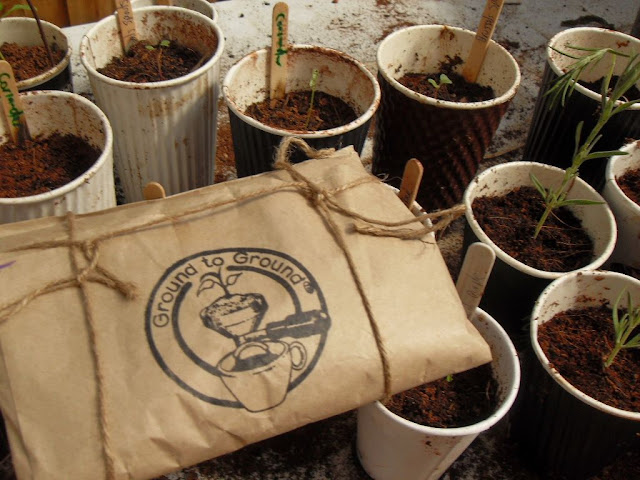
And here is the finished product, a bag of dried used coffee grounds. The Ground to Ground logo is stamped on the front.
And a little marketing info on the back.
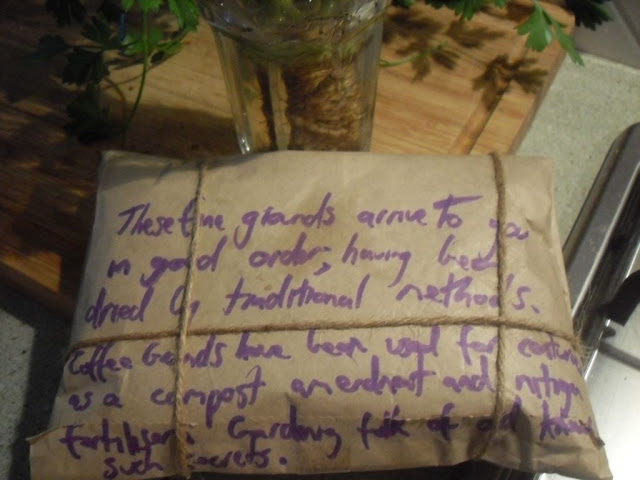
“These fine grounds arrive to you in good order, having been dried by traditional methods. Coffee Grounds have been used for centuries as a compost amendment and nitrogen fertiliser. Gardening folk of old knew such secrets.”
So what are some of things you could do with a bag full of dried used coffee grounds?








 Ground to Ground
Write some words and spread joy