Coffee Grounds for Compost and Soil
I’ve written in previous posts about the joy of creating new soil, most recently in the one New Soil in the Making. The focus of that post was that by using a variety of compost bins and other methods, we can turn kitchen scraps and other organic mater back into soil, which is what our plants need for survival. No soil, no micro organisms, no life.
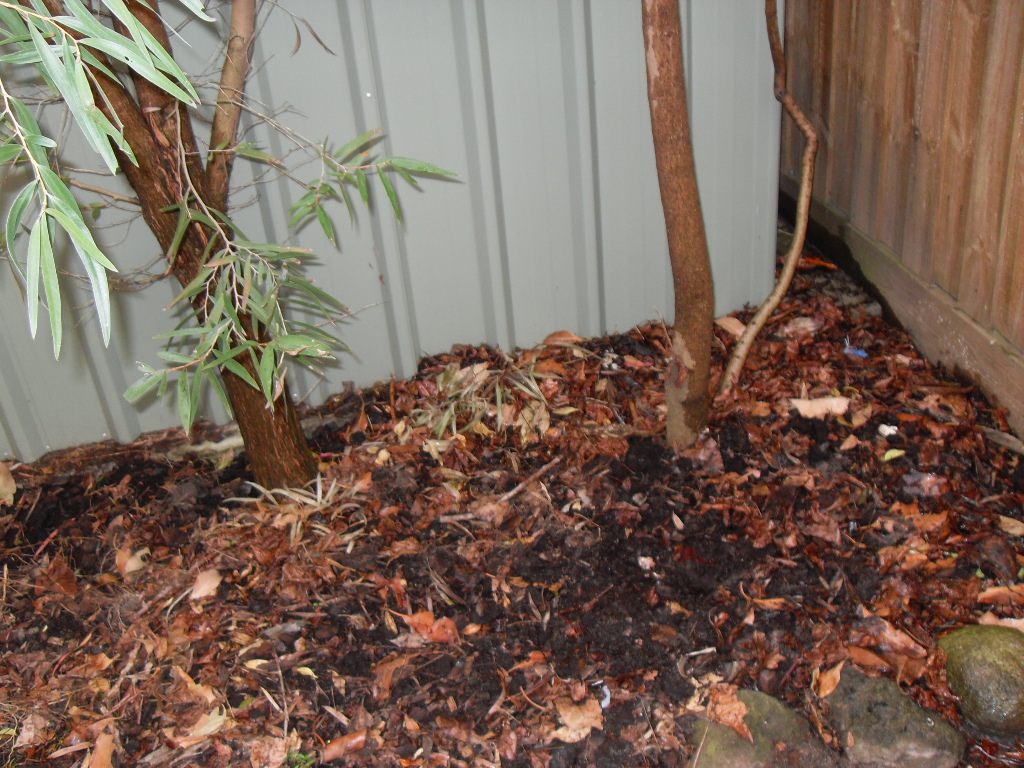
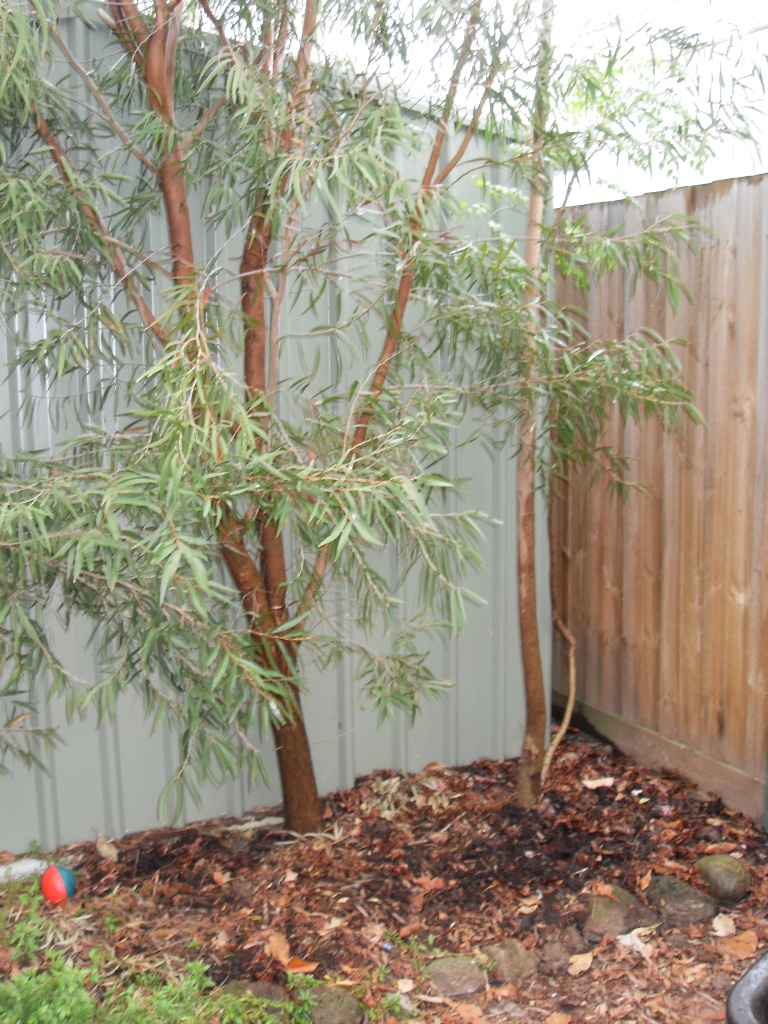
Seeing how I use coffee grounds in the compost bins, the thought occurred to me that we just might be able to combine it with dirt from around the side of the house (you know the dry sandy nothing grows in it type), along with leafmould, and a few chicken carcases dug in about a foot or so. This is what it now looks like, having been left to rest since Winter began, several months ago.
This is the area in question.
And the wide shot
A scrape of the top layer reveals the grounds, leaves and twigs.
A coffee cake has survived intact. There were a few of these still lying near the surface, but notice how there is no mould on it. Looking through the others, all the wet soaked through cakes were mould free, and the dryer ones below the top layer were showing greater signs of decomposition.

Removing the top layer to expose new soil in the making. It also carried that earthly smell. A combination of leafmould and coffee. Very nice just to sit there and think of nothing else.

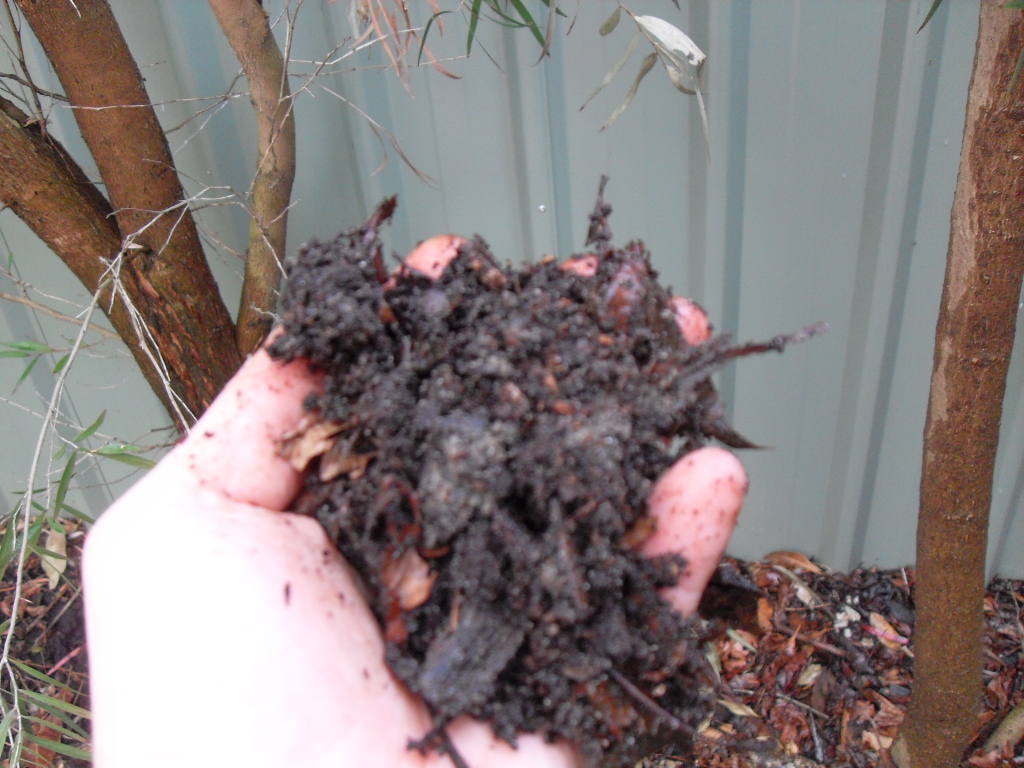
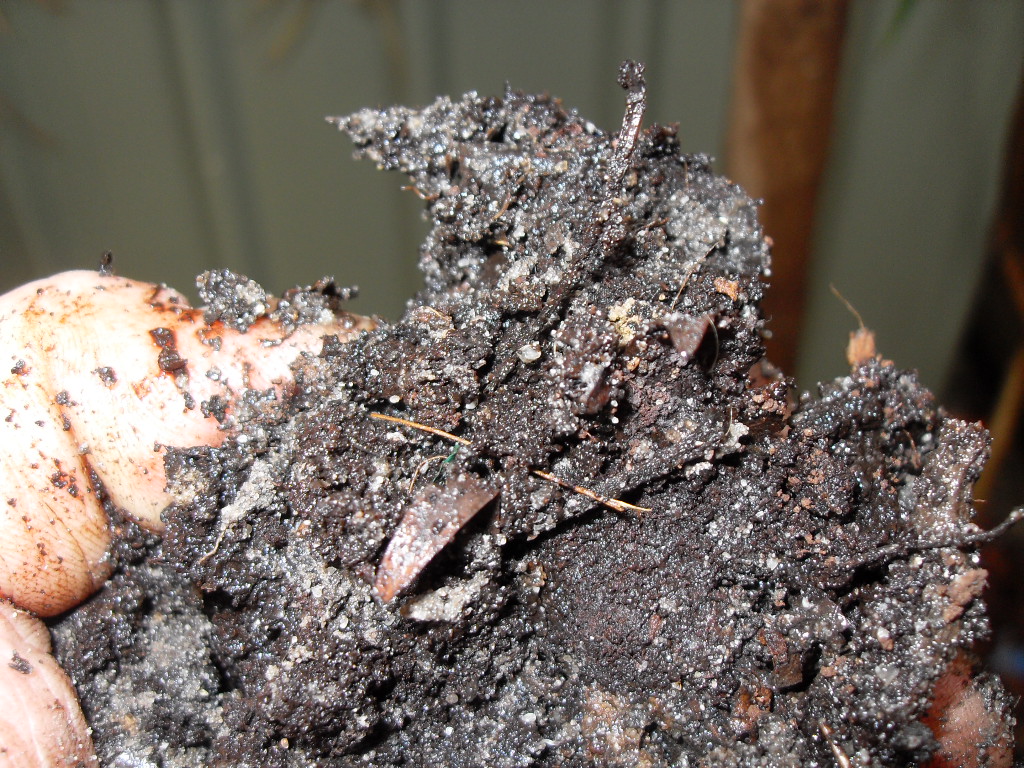
A scoop of the soil below the surface.

And how could I miss out on the close up!
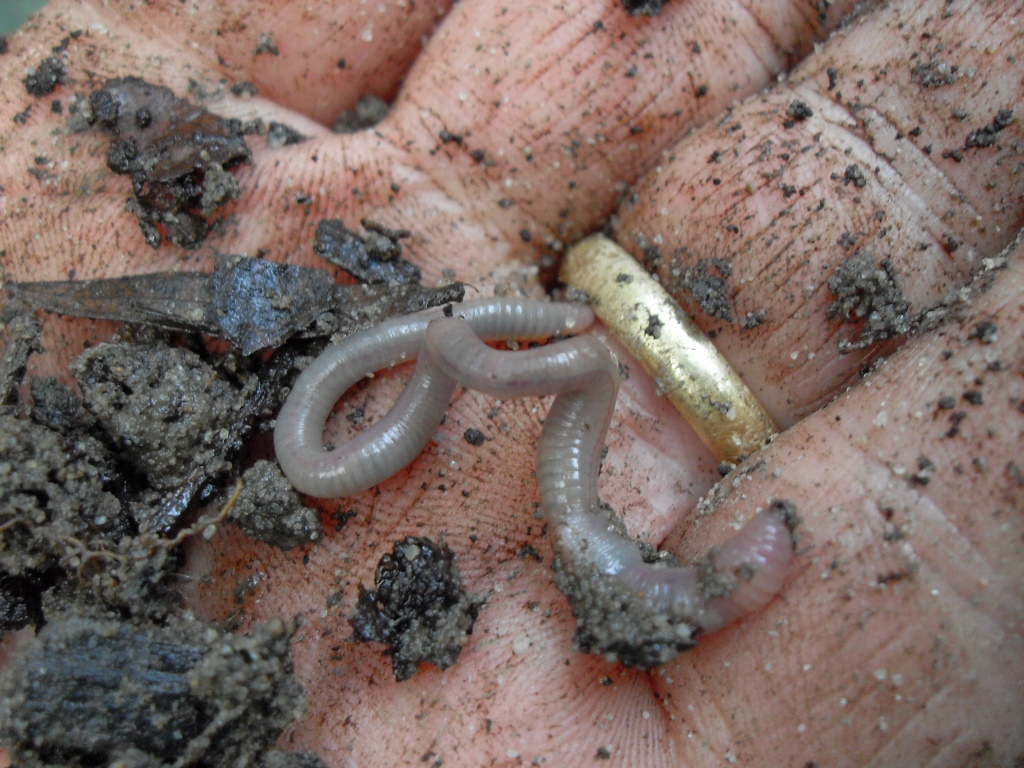
And a few of these little guys. If the worms are there, it’s a good bet that the other required organisms are there also. Everything from bacteria to fungi to centipedes and spiders. And look how romantic we have matching rings.
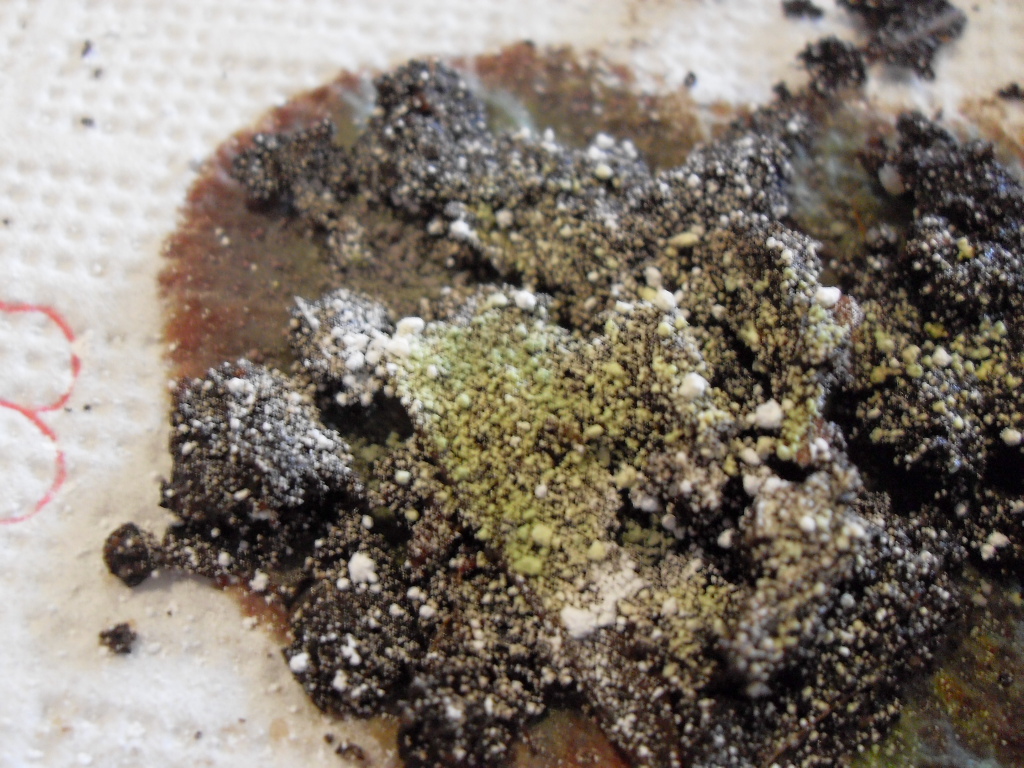
Now running some pH tests on samples of the soil. The outer purple sections are dye stains applied to the soil and paper napkin. The greenish sight in the middle is the result of dyed soil with barium sulphate on it. The colour represents the pH level.

Image from sample 2.

And from sample 3.
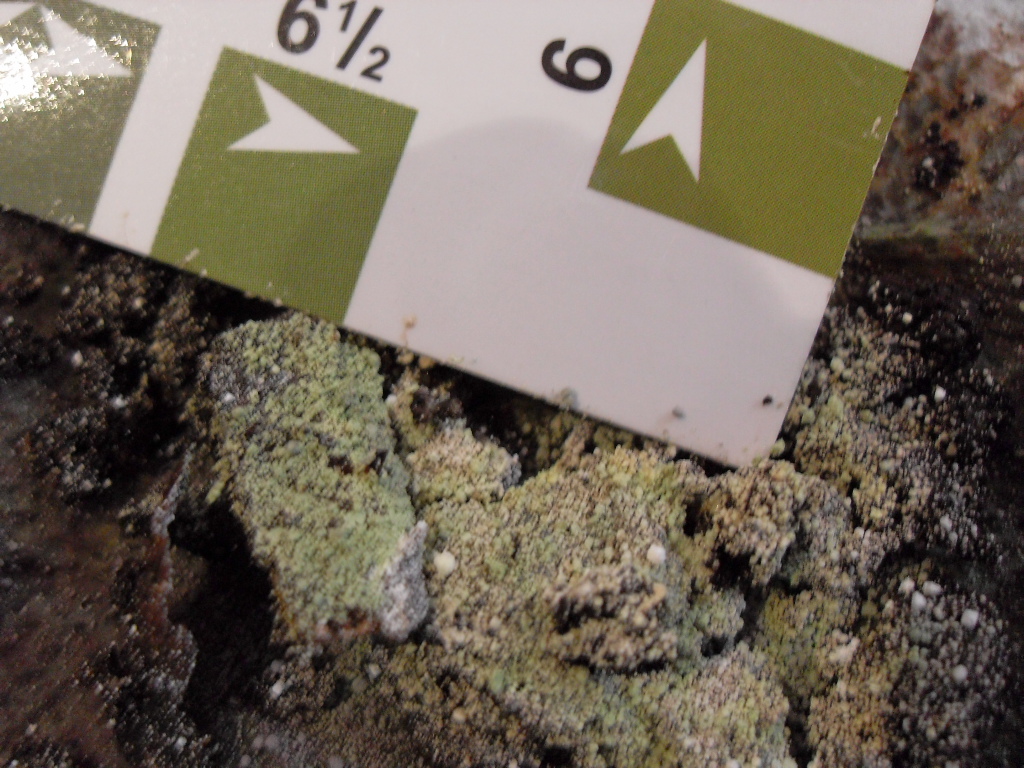
Now looking at sample 1 again with the matching chart. In trying to find the appropriate match it seemed to sit around the 6pH level, which is not a problem for most plants and vegetables as is, and as it breaks down further should move increasingly to alkaline pH
So as you can see, I have the power of new earth in the palm of my hand (queue evil laugh). Seriously though, a very satisfying thing to do, this thing with coffee grounds in the garden. If you are composting soil but nothing grows, try some of the things covered above.
What Others Are Reading
- The Ground to Ground Primer – Coffee Grounds for the Garden (groundtoground.org)
- Coffee Grounds for Compost and Fertilizer (groundtoground.org)
- Collecting Coffee Grounds in the Office (groundtoground.org)





 Ground to Ground
Leave a reply to Winter Composting How-to for Spring Success | theorganicauthority.com – Organic Living Cancel reply