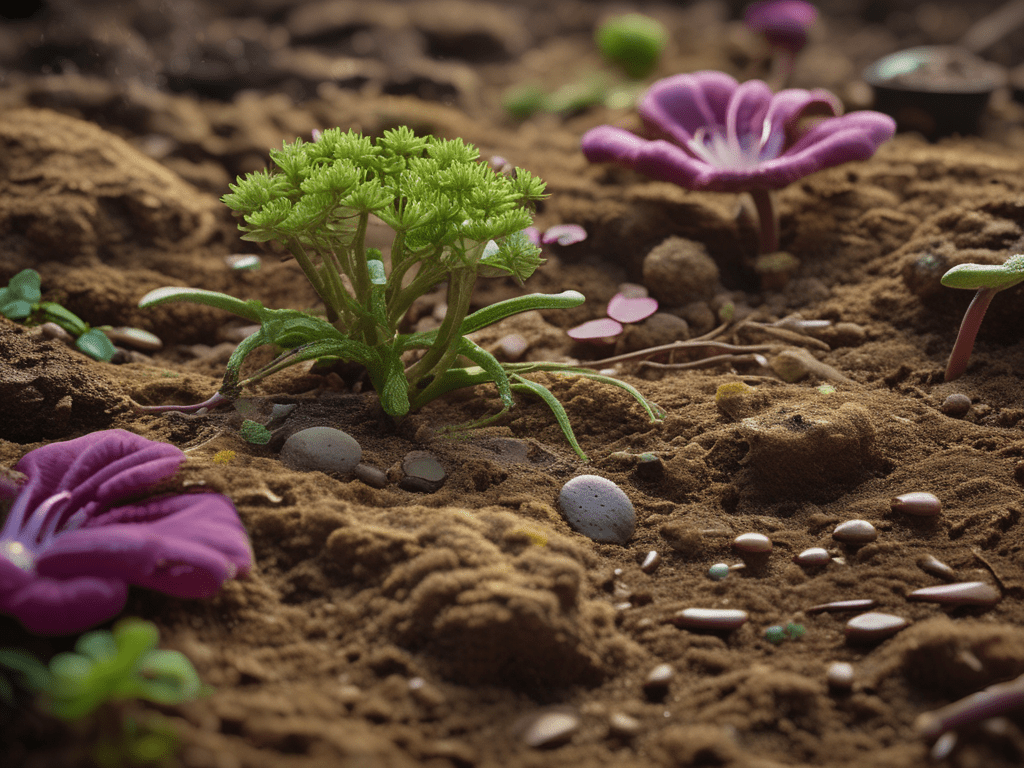
Informed by the soil biology research of native Minnesotan, Dr. Elaine Ingham, Teaming with Microbes – The Organic Gardener’s Guide to the Soil Food Web by Jeff Lowenfels and Wayne Lewis introduces us the cast of characters that live in healthy soil, their relationship with each other and the critical balance needed between these microscopic critters if they are to naturally protect plants from disease and pests.
Enemy number one are toxins that disrupt this balance between the millions of bacteria, fungi, nematodes, protozoa and arthropods that all play a role in converting minerals into usable nutrients for plants. Instead of relying on pesticides, herbicides, fungicides or chemical fertilizers that will ultimately aggravate problems, fixing the soil is offered as a solution for whatever plagues us in the garden.
How is this to be done? We can start by re-introducing a diversity of beneficial microbes into the soil. These “good guys” are plentiful in any properly aerated compost, which anyone can make. While simple answers like this can sound too good to be true and while our beliefs about gardening and farming can be as unyielding as any religion, by the last chapter it’s hard to believe that commercials for Round-Up were ever anything but pure satire.
Disrupting the soil structure is another threat to optimum soil food web balance. For example, tilling disconnects plants from a complex communication network that is used to exchange nutrients and even call for help.
The book begins with a stunning example in which a tomato plant calls upon fungus to protect it from a nematode attack. In another example, the fungus does not come to the plant’s rescue. Why? This question makes for a thrilling read that promises to renew your amazement with not only a sprout that pierces the ground or a flower that reaches for the sun, but with the living soil that sustains them.





 Ground to Ground
Leave a reply to shanegenziuk Cancel reply