
Collecting Leaves For A Better Garden
Collecting leaves for compost is one of the easiest ways to build up a free supply of high-carbon material for your garden, and for anyone close to deciduous trees around Autumn, dried out leaves are literally left at your feet.
This post is not so much about how to use the leaves in your compost, but how to go about collecting them for when you need high carbon ‘brown’ materials available (and if you are looking for information on how to use dried leaves for mulch or compost, you will find this article on making coffee compost most helpful). Having a good supply of leaves around means you can also shred them to use as a mulch, or hold them in something with good airflow and add water to start their journey into leafmould. Dry to semi dry leaves are a great material to have handy, so let’s put aside our used coffee grounds obsession (only for a moment), and get too it.
Tools for the Job:
- A decent quality rake. I used one of those cheap plastic headed rakes to collect leaves, until the handle snapped in two one day out in the field. Fortunately the part still connect to the head was long enough to kind of rake leaves, and it does say a great deal for the phrase ‘You get what you pay for’. If you plan on doing a lot of leaf collecting, go for something closer to $30 than to $10 if you can.
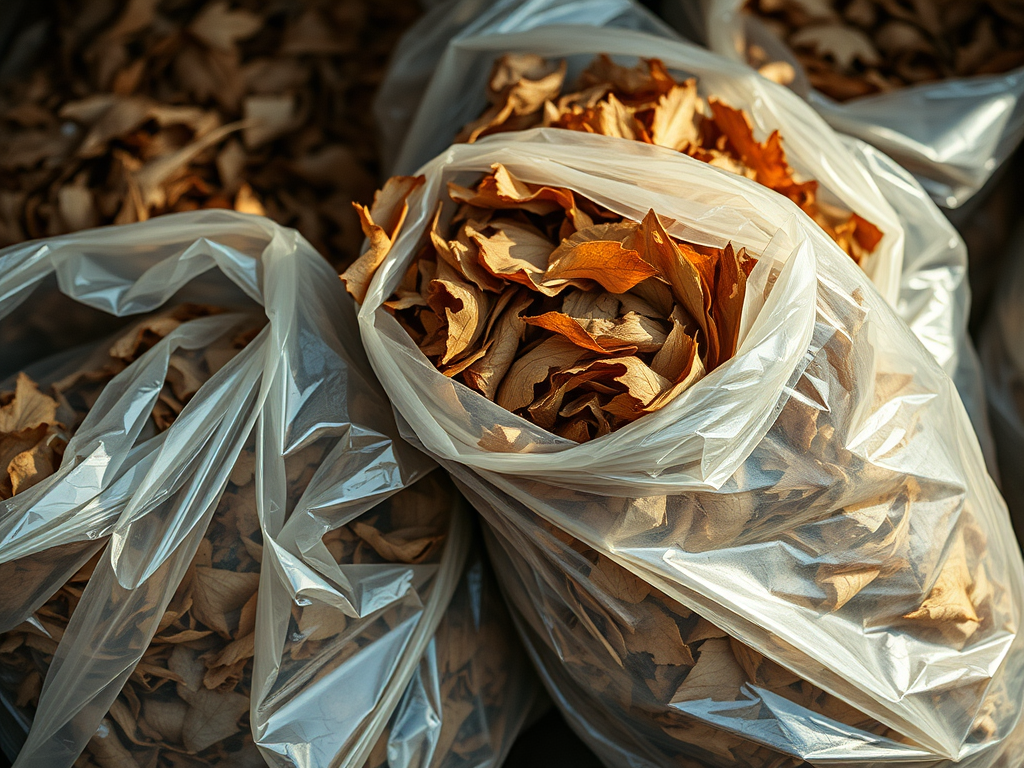
- Appropriate bags. I say appropriate because I like to store them in thick plastic bags, and these are the same kind of bags that the lawn mowing guy gives me all the lawn clippings in. All you really need is something that can take the rigors of dried leaves and twigs going down the sides without tearing badly, because that is going to cause all kinds of problems out in the field.
- Transport. Each of the bags in the photo below weighs about 20 kilos, which is all good until you need to carry it back to your house up the road. Try not to fill 3 bags full without a way to get them back!
- A Map. If you have no idea where the leaves might be, look around parks, carparks, schools, golf courses, particularly areas where there is fencing and a good breeze heading into it. You will find that the leaves will collect themselves, and you’ll just need to get them into the bag.
- Gloves. Good quality leather gloves will keep you safe from the nasty sharp objects that lay in wait. And as a bonus they will keep your hands warm, so its all good.
- Boots. If you are walking around where leaves collect, best get a good pair of boots on to protect your feet from mud and wet, to give you balance, and keep you warm. Also, boots and the gloves make you look cool!! That’s what I’ve been told anyways…

If you keep the leaves bagged and in a dry place, they will last there for a long, long time. To start the process of turning a bag of leaves into a bag of leafmould, open the bag up to the elements and add some water. Then poke a few holes in the bag to allow the air to get through. Toss the bag around every couple of weeks and over the course of 6 months you should see the transformation of those leaves into something that is perfect for next Spring’s seedlings. Using leaves for compost this way is slow but the results are well worth it.

What you might find is that people will wonder why you are collecting leaves into large bags, and you might even get asked the question. I have been asked a couple of times as to why I do it, and that leads to the topic of home made compost and that leads to the topic of collecting coffee grounds. It is very satisfying being able to collect an ideal compost material and educate at the same time.
Somewhere in the world right now, leaves are falling. Where are those gloves!!
What are some of the materials that you collect for composting?






Leave a Reply