pH of Coffee Grounds
Continuing on from a series of posts about the impact on soil pH from the addition of coffee grounds, were we take a good look at coffee cakes in various conditions and see what it all means.
Four samples were tested for pH levels:
- Fresh Coffee Grounds – collected from the cafe that day and still in cake form.
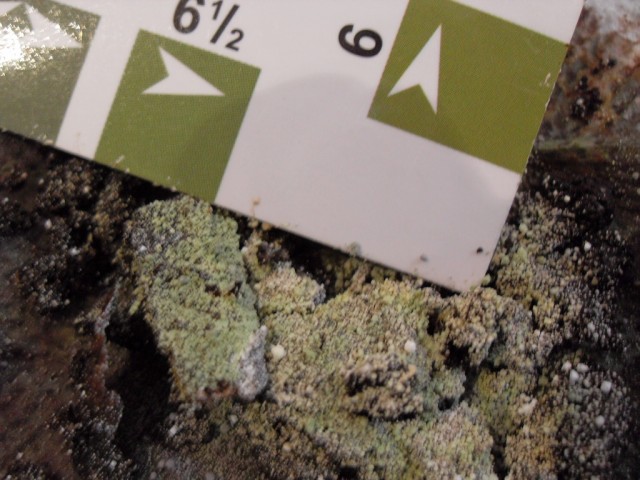
- Nine Month Old Coffee Grounds that had been sitting exposed under a shaded spot of the garden. There would have been many hours of sunlight and a fair bit of rain hitting that coffee cake over the past 9 months.
- Nine Month Old Coffee Grounds – buried a good 4 inches below the surface.
- Extract of worm castings (vermicast) with worms fed coffee grounds to 25% of total diet, by weight
The test conditions of kitchen table will not be featuring on an episode of CSI any time soon, however the test was done with a Manutec Soil pH Test Kit, comprising a pH Dye Indicator (Bromocresol Purple), and Barium Sulphate.

Sample 1 (Fresh Coffee Grounds) – pH 5 to 5.5

Sample 2 (9 month old coffee grounds exposed) – pH 5.5 to 6

Sample 3 (9 month old coffee grounds buried) – pH 6 to 6.5

Sample 4 (vermicast from 25% coffee grounds) – pH 8.5 to 9

I wonder how long it takes for these coffee cakes to break down? Only one way to find out.

Another successful day at the kitchen table.

Advice on Preparing Coffee Grounds for the Garden
So what does it all mean? Before you start throwing coffee grounds around the garden, have a read of an earlier post where we discuss plants tolerance according to their pH. If by chance you have a plant with certain pH needs that falls way outside the range that coffee grounds provide, then it would be best not to use them. However, if you were to ask what outside plant benefits from coffee grinds? The answer would be – most of them.
What these tests showed is that coffee grounds pH levels can be altered depending on the conditions in which they are left to decompose. The closer they are into soil, the quicker they move to pH neutral, which is exactly the advice I was given when starting to use coffee grounds for composting.
What surprised me the most was the high pH of vermicast at 8.5 to 9 pH. I have seen anecdotal references to vermicast sitting around 6.0 pH and that is way off what I had.
However, I did find a detailed 2008 article from the Journal of Bioscience (Jais,H & Hassan, H) which states:
Regardless of types and initial pH of the raw materials, pH of vermicast has shifted to near neutral or more alkaline (6.49–8.35).
So maybe not that unusual, although I will repeat these tests in a few months and see where it goes.
Have you found different results to what I’ve found (including coffee pH, as in before it gets turned into this wonderful fertilizer)?




 Ground to Ground
Leave a reply to shanegenziuk Cancel reply