

How to Build a Better Worm Farm
With all the coffee grounds and vegetable scraps coming back to my place, there came a point when I was running out of places to put it all.
Hard to believe, what with 150 kilos of coffee grounds and rotten vegetables coming in each week (and then all the lawn clippings and dried leaves from the local gardener).
I guess there is only so much compost bins can handle, especially with the onset of Melbourne’s Winter chill.
Lucky for me that I had already been experimenting with car tires for growing potatoes, which worked very well for a decent crop, and the worms had already decided to make it their home, so well suited were the conditions.
This post is about my experiences with using car tires for vermicomposting and regular composting, and with this method I seem to be able to do them both with the same assembly.
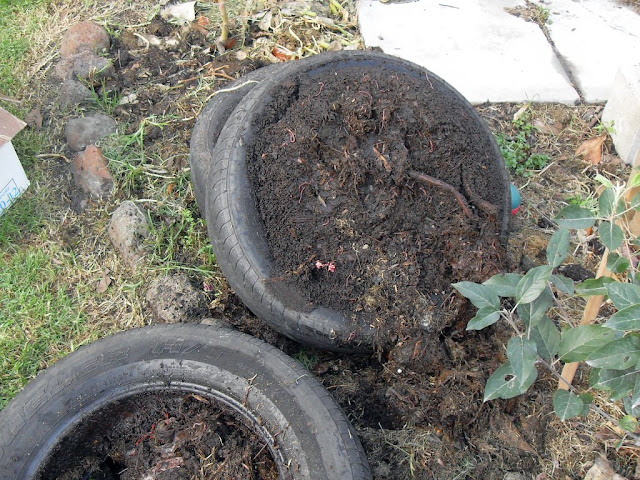
In the photo below – I’d just thrown off the top two tires, and you can see all the worms over the surface of what is potent vermicast. I stack them close to the fruit trees to provide an ongoing source of quality fertilizer, this one being the Apple Gala.
Where to Get the Tires and What Sizes to Select?
Once you start paying attention to what is left on the side of the road, car tires seem to be everywhere. It is not surprising because tires are death proof, even after the tread is ground down to the metal. This is one of the reasons why they are ideal as a compost bin, because it gives you the same long term certainty of the commercially purchased plastic equivalent.
Collecting coffee grounds from all over has endeared me to bringing home all kinds of crap (some think ‘rubbish’ – I think ‘resource’), so if foraging off the side of the road does not appeal, then your local tire shop will have a stack of them, waiting for a kind person such as you to help out.
Now for the size of tire. I would recommend 13 inch diameter tires, like the ones on small cars. They are better because a full tire of vericast is upwards of 30 kilos, and the larger the diameter (the hole in the middle), the harder it is to keep all the contents in the tire. I’ve had this happen a few times when moving the larger 15-17 inch tires, and lots of poor little worms ended up on the grass.
Make sure to get all the same size tire for each stack, because you want minimal gaps between each tire, so maybe check this before you get them home. I would recommend 3 tires to a stack, which gives you a height you can easily work with, and enough volume to keep the worms happy for a while.
Feed and Worms will Grow!
By adding a wealth of nitrogen rich organic material, these worms grow to a larger size that what I get from their sisters in the traditional plastic worm farm, even though they are fed more or less the same diet.
Fill your car tire stack with what you would normally put into the compost bin, and cover the top off with a thick layer of lawn clippings, leaves, or damp newspaper (3-6 inches will do). This keeps the smell in and the flies out, plus it forms a nice seal to reduce heat loss and allow any rain to flow through slowly.
There is more moisture in a car tire worm farm than the normal type, and they retain heat more effectively than plastic which helps break the food down quicker and make this available to the hungry worms.
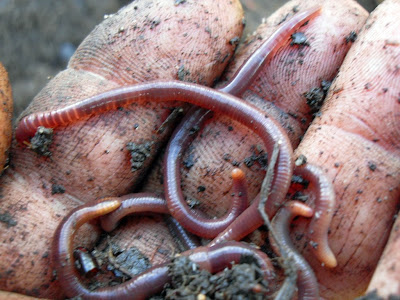
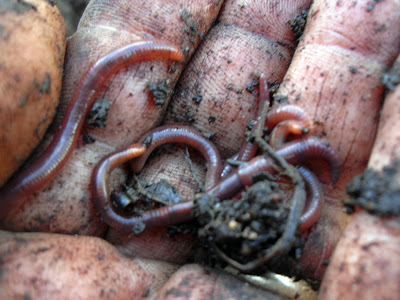
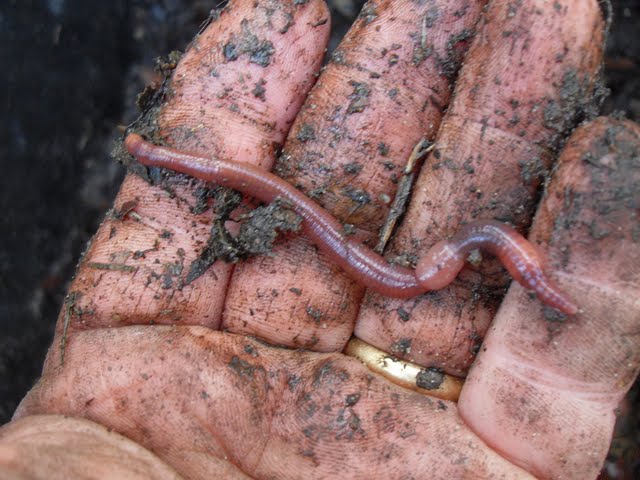
Healthy slimy worms, with no complaints for the landlord. At least today…
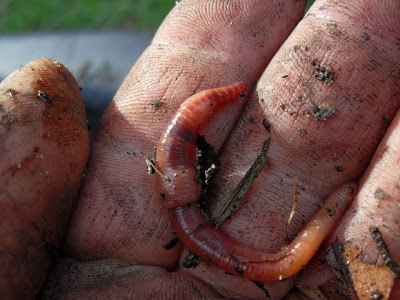
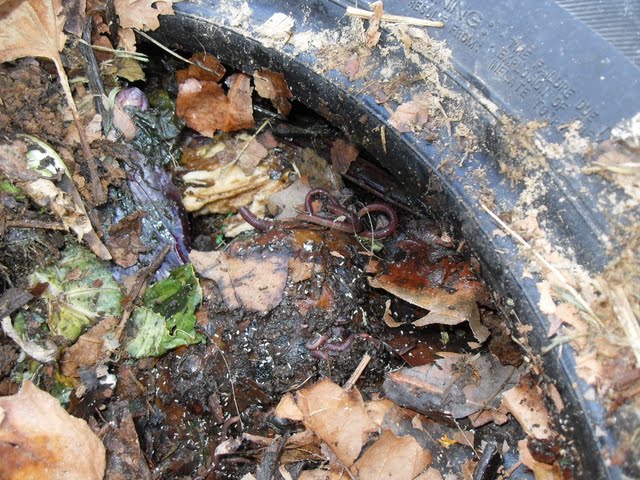
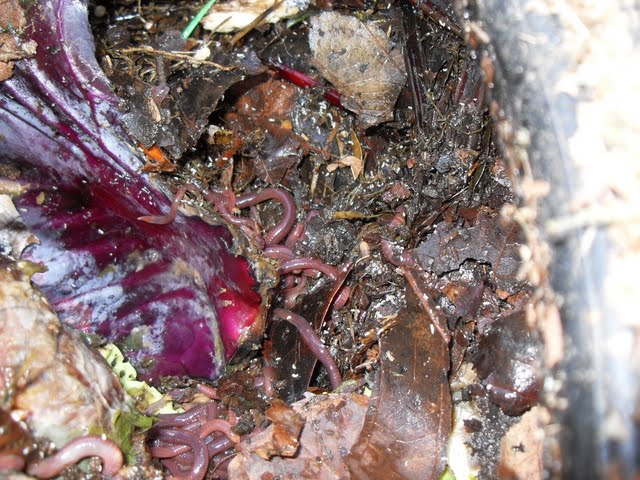
And the view inside their rubber home.
And what would it all be without the video? There is no Shane talking in it so unblock your ears, and keep an eye out for the leaping worm at the 54 second mark!!
So now we have covered off some of the background and steps to using car tires for a worm farm or compost bin, let’s look at where I am going with all this.
The Future of Home Vermicomposting
Or is that the future of my home vermicomposting? Either way, this is the latest and greatest worm farm made from a car tire.
By using the removed side of a milk crate as a base, the vermicast stays in place when moved around.
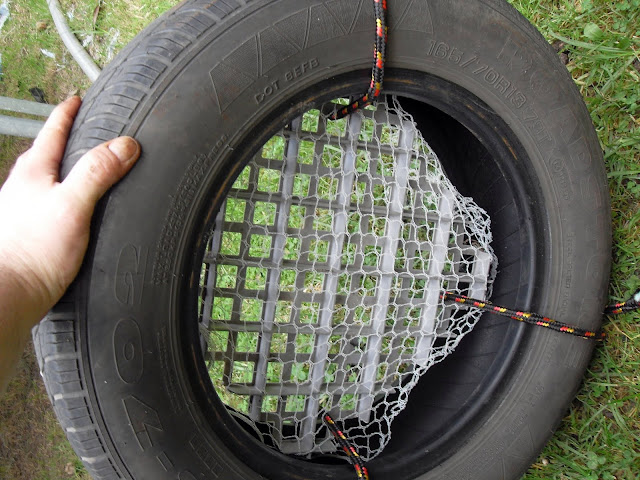
And the view from the other end. The nylon rope keeps it all in place and acts as a carry strap to move the tire around.
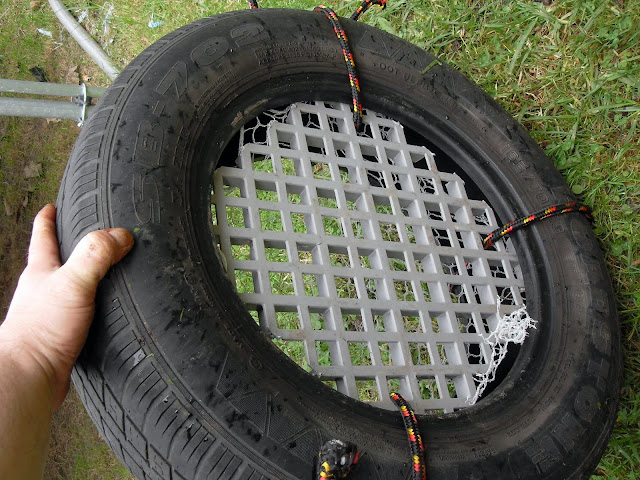
Consider using discarded car tires for composting. They are cost free and are very effective at breaking down organic material into beautiful soil for your garden.
What are you doing with your worm farm?


 Ground to Ground
Write some words and spread joy