Returning Waste Back Into the Ground
For those of you that regularly follow this blog (and why not!), you would know how much more productive my garden has become these past 12 months or so. One of the reasons for this is because the soil is in excellent condition, and to get that condition requires large quantities of organic material. That is the difficult part – collecting used coffee grounds will only get you so far until a variety of material is required.
Fruit and Vegetable Waste for New Soil
What I needed was a range of organic material to compost, and in keeping with the theme of sustainability, it needed to be of the type that would ordinarily end up in landfill or transported somewhere to be processed. And this is what lead me to the local fruit and vegetable shop.
In the same tradition of speaking with cafe owners about their spent coffee grounds, local grocers are more than happy to make a connection with their customers anyway they can. It is the kind of return to the community that doesn’t involve making a cash donation, or catering a sporting event. What I get out of the deal is nutrient rich, easily compostable material, and the grocer gets to reduce landfill contribution and/or disposal costs, and at the same time the relationship is stronger for it.
Here is an example of the fruit and vegetable material I am getting from the local grocer. On the menu we have rotting cabbage and cauliflower leaves, lettuce, eggplant, some kinds of root vegetable, and possibly zucchini and mouldy red peppers. Yummy!!
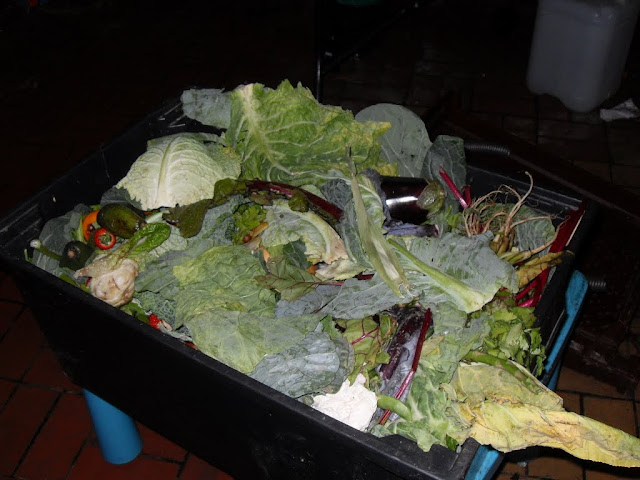
According to my most trusted authority on composting, Tim Marshall, the Carbon to Nitrogen ratio of this type of material is 15:1, which makes it higher in nitrogen than used coffee grounds (20-24:1), and lawn clippings (18-21:1).
Mr Marshall goes on to state that:
“Kitchen Waste…Very good for the compost, contains a wide selection of nutrients. Use any material except meat and fish.”
So what you get is a nutrient rich, nitrogen heavy compost material for no cost. And you keep it out of landfill or needing to be driven off for processing. Mmmmmm, sounds pretty good to me!
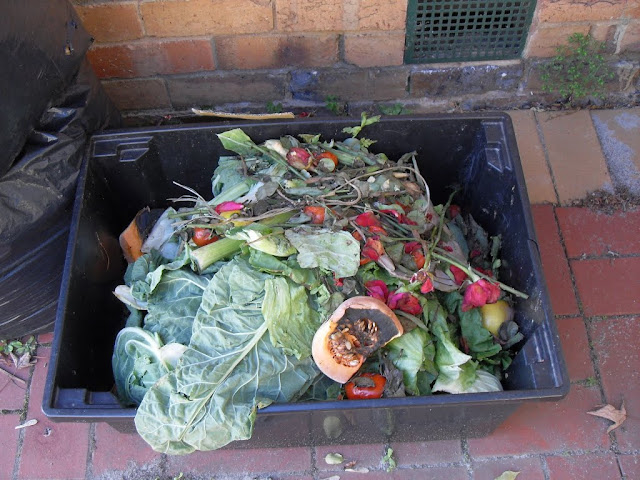
So here we have another day, another bucket… pumpkin, some flowers, and more of the same leafy material.
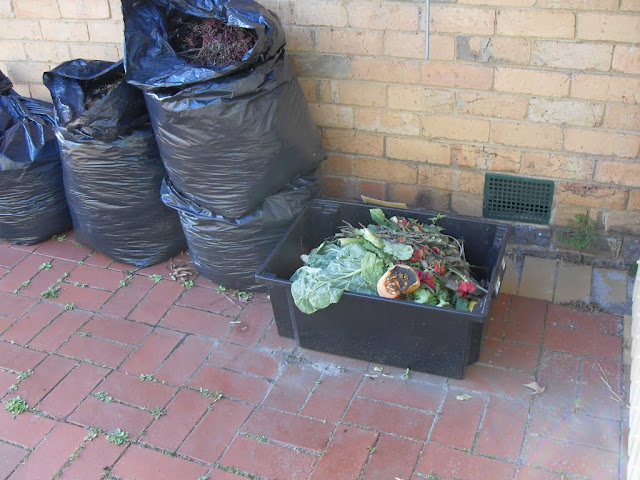
And waiting in line are all the bags of leaves and grass clippings that the local lawnmower guy drops off. I save him about $40 a trailer load to send it to the dump, so we are both happy with the arrangement.
So how should you go about recycling waste into soil?
Well, you can start with a normal compost bin, or go for the heavy duty, ‘hot’ compost bin that I use. Even in Winter it is able to handle 50 kilos per week, and more than double that in Summer.
You can also setup a compost bin / worm farm out of car tires. A 2-3 tire stack will take a bucket full of kitchen waste each month. So imagine the contents of that bucket being turned into valuable vermicast on a constant basis!
Creating great soil is about getting your hands on as much organic material as you can. Over this last year I’ve paid for about 200 kilos of compost, and collected at no cost several tonnes more. It is everywhere you care to look, so get to it if you can.Your soil will reward you with healthy and productive plants.
What kind of ‘waste’ are you recycling?
Related articles
- How to Grow Bananas in Melbourne (groundtoground.org)
- Soil Composting – Sustainable Means Local (buildingsustainablelifestyles.wordpress.com)
- Composting 101: An Eco-Friendly Option for Organic Waste (everydayhealth.com)





 Ground to Ground
Write some words and spread joy